Rate Watch is still under construction ready week three in october 2026
Our Stranraer campaign office is nearly
complete, First week in November
The email join@ratewatch.mail is still being set up
Dedcated in Campaigning to Shift Mandantory Charity Rate Relief Decision Making to the Third Sector
Also working together to spread support
Charity Rate Relief
Mandatory 80% charitable rates relief exists in law to support charities that use buildings for their work. In practice, many organisations find the process confusing, inconsistent, and heavily focused on proving continuous physical use rather than the charitable purpose of the occupation.
RateWatch exists to document what is happening, share practical knowledge between charities, and push for clearer and fairer processes across Scotland.
25000+
Charities Potential
0
Policy Changes Influenced
0
Appeals Successfully Assisted

A National Issue
THE PETITION IS NOW CLOSED 8TH OCTOBER 2026
CHECK OUT Public Petitions Committee | Scottish Parliament TV
The problem
Mandatory 80% charitable rates relief exists in law. Section 4 of the Local Government (Financial Provisions etc.) (Scotland) Act 1962 says a registered charity is entitled to that relief where premises are wholly or mainly used for charitable purposes.
Parliament did not ask councils to count daily footfall, paid staff, or posters visible from the pavement. It asked whether the building is used for the charity’s work.
In practice, small volunteer-led organisations are often treated as if the relief were a favour. Officers visit unannounced, take an external photograph, record “empty”, and refuse. Evidence the charity then sends — licences, insurance, utility bills, window posters, beneficiary statements — is set aside. Recovery continues. Sheriff officers arrive while the application is still live.
That is how a charity ends up with a bill it should never owe.
Why this is national
The pattern is not confined to one council.
Eat Up (SC048548) and other volunteer-led groups have met the same script in Dumfries and Galloway, Glasgow, Moray, West Lothian and North Lanarkshire. One South Ayrshire file opened the same way — a summary warrant — and then the warrant was cancelled and relief granted. The opening move was still enforcement first.
When several authorities, miles apart, use the same sequence, the problem is the system, not one difficult officer.
Scotland has more than 25,000 registered charities. Many of the smallest ones use buildings intermittently: space for other groups, events, storage, start-up desks, arts and community work. That is still charitable use. A darkened doorway on a Tuesday morning is not a legal test.
What the law actually requires
The Court of Session in Centric Community Projects Ltd v Aberdeen City Council [2019] held that councils must apply the statutory test and must not rest a refusal on snapshot observations alone.
Charity status is a matter for OSCR. The rates question is use for charitable purposes over time, not a still photograph.
The extra 20% is discretionary. The 80% is not.
What happens on the ground
Typical sequence:
- Application or occupation is known to the council.
- Unannounced external visit or a landlord webform.
- “No signs of use.”
- Demand for commercial-style proof: rotas, metered bills, emails with users, daily presence.
- Silence, or a refusal without engaging the charity.
- Final notice, summary warrant, sheriff officer.
- A committee or complaint route that sends the file back to the same department.
Volunteer trustees answer this at evenings and weekends. The council deploys paid officers. That imbalance is part of the problem.
What RateWatch is for
RateWatch documents what is happening, shares practical knowledge between charities, and campaigns for the administration of mandatory charitable relief to sit with people who understand how voluntary organisations actually work.
We are not asking for a free pass. We are asking for the 1962 test to be applied as written.
If your organisation has been refused relief, billed as empty while you were using the building, or visited by sheriff officers during a live application, you can add your experience — named or anonymous.
Add your story
Get support
Sign the petition (replace with the live PE2236 link)
The working paper to view below.
Lets Go
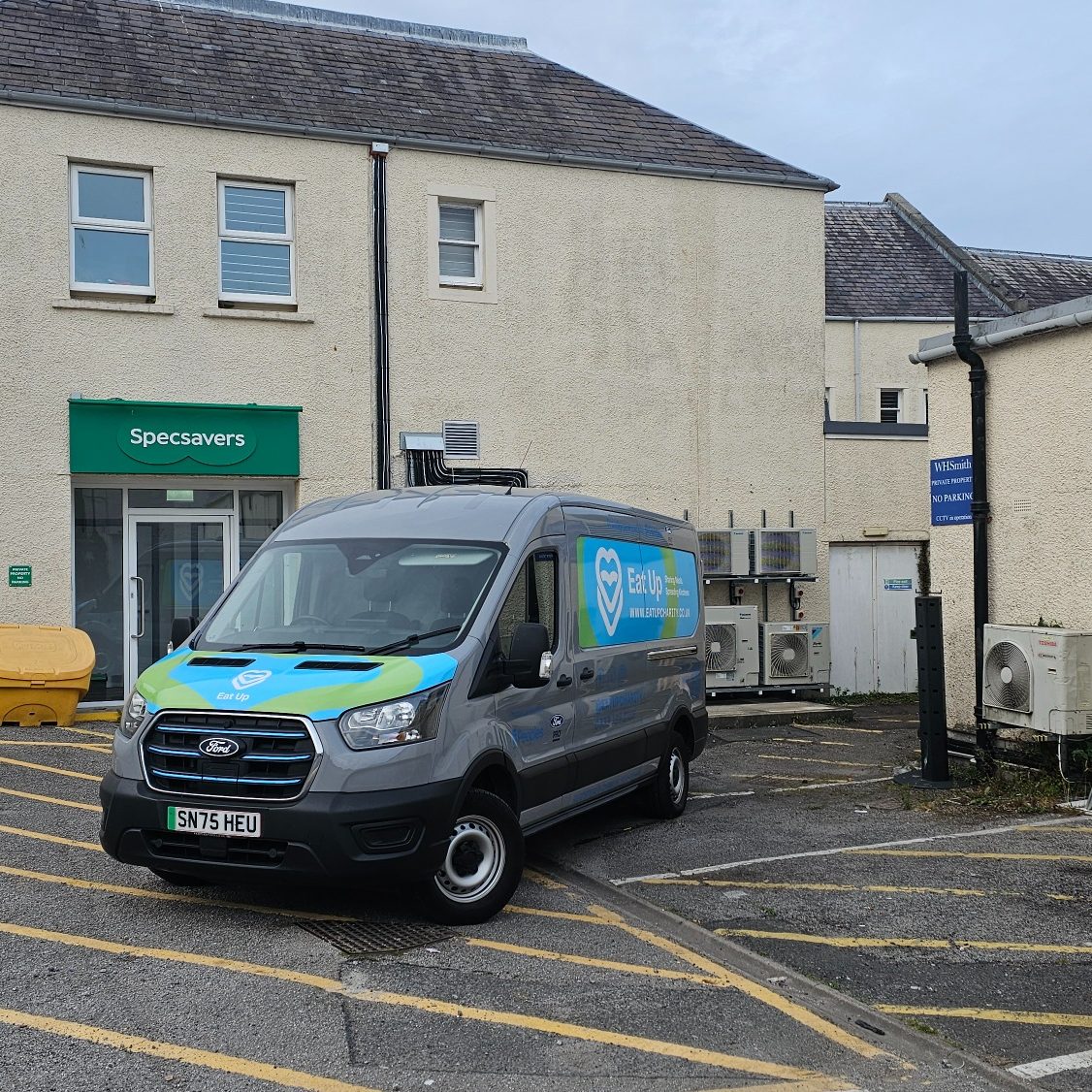
Individual charities are being pursued for rates bills that mandatory 80% relief was meant to stop. Eat Up took a community space at George Street, Stranraer, used it for other groups, and still met an unannounced doorway photograph, a refusal, and enforcement before the evidence on the table was properly examined. That sequence is turning up across Scotland, not just in one town. RateWatch exists to document it, help the next charity through the process, and campaign for mandatory relief to be decided by people who understand how the third sector actually uses a building. Read the story, come to the Wednesday drop-in in Stranraer, or write to ratewatch@email.

Active Campaigning
RateWatch campaigns for mandatory charity rates relief to be administered with the third sector, not only by revenues teams whose job is to collect. We want the 1962 test applied as written — wholly or mainly used for charitable purposes — instead of snapshot visits, shifting evidence packs, and sheriff officers while an application is still live. Join the campaign if you want clearer rules, fairer decisions, and no volunteer group left to fight this alone. Sign up at www.ratewatch.online or email join@ratewatch.email
What we mean by campaigning
Campaigning is the public work. Support is one charity’s file. Campaigning is changing the rule that produced the file.
Mandatory 80% relief is already the law. What we are campaigning to change is who applies that law, and how. Right now the decision sits with local non-domestic rates teams. Those teams also bill, recover and instruct sheriff officers. RateWatch’s position is that a mandatory entitlement should not be decided inside a collection culture. It should be decided by people who understand how volunteer-led charities actually use a building — intermittent, shared, upstairs, event-based, space given to others.
That is the campaign in one sentence: move the administration of mandatory charitable rates relief toward an independent, third-sector-led or community-focused process.
Scottish Parliament petition PE2236 asks Holyrood to do that. Signing it, sharing it, and telling MSPs it is happening in their area is campaigning.
What campaigning looks like in practice
- Putting the Stranraer story, and other charities’ stories, where the public and MSPs can see them
- Asking councils to publish how they measure “use”, and to stop recovery while a mandatory application is live
- Writing to ministers, COSLA, chief executives and the IRRV when the process and the statute have come apart
- Building a network so the next group is not starting from a blank page
- Wednesday drop-ins at George Street, Stranraer — the campaign centre as well as the help desk
Campaigning is not shouting at officers. It is making the pattern visible and asking for a different decision-maker.
What it is not
It is not a promise that your bill will be cancelled.
It is not legal representation.
It is not an attack on every council or every rates officer. Some files end with relief granted. The campaign exists because too many files start with enforcement anyway.
How to take part
- Sign and share PE2236.
- Email join@ratewatch.email and say you want campaign updates.
- Add your experience — named or anonymous.
- Come to the Wednesday drop-in at Units 2/3/4, 23–29 George Street, Stranraer, if you can.
- Send the problem page to another charity that is sitting on a rates letter.
Community Focus
RateWatch starts from the groups that actually use the buildings: village halls, arts rooms, food projects, start-up desks, faith outreach, repair cafés, and small charities that give space to somebody else. That is community work. It does not always look like a shop open six days a week, and it should not have to.
We listen before we speak for anyone. If you send a story it can stay anonymous. If you come to the Wednesday drop-in in Stranraer, you get a table and a straight reading of your letters — not a lecture. Small and medium organisations are the point of this campaign, not an afterthought behind the large household-name charities that can already afford advice.
Community focus also means the place itself. George Street is a campaign centre because Eat Up used it as a community space. The aim is that other groups can walk in, see they are not the only ones, and leave with a next step.
